Still using those outdated marketing techniques to bring traffic and finding it hard to rank up the products and services? AI in digital marketing has helped marketers to bridge this gap. It has transformed digital marketing with its emergence in the 1990s and rapid growth in the 2000s. The impact of AI on productivity, efficiency, and innovation has led to its fast implementation. This article will help in learning about the emerging trends and roles of AI in digital marketing.

What is AI in Digital Marketing?
AI in digital marketing refers to the enhancement of human intelligence in computers to perform automated tasks, such as personalization and delivering relevant marketing experiences to customers. It utilizes tools such as machine learning, chatbots, and data algorithm models to generate marketing insights that help marketers attract the right traffic. It offers a great opportunity to become productive and efficient as it provides real-time, relevant information to businesses. It helps in improving human efforts in marketing their services.
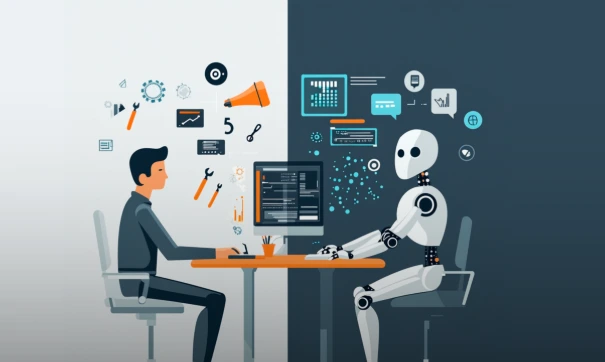
AI Digital Marketing Tools
A vast number of AI digital marketing tools are available that help businesses enhance their marketing. These tools assist marketers in improving their productivity. Some of these tools are listed below:
- ChatGPT– It is the most commonly used AI tool for content creation, drafting email campaigns and posts, and conducting research. It helps in complementing human work through technology and innovation.
- Gemini– Google Workspace’s Gemini helps in writing, refining, summarizing, and elaborating the content. It evaluates a huge amount of datasets and provides the user with quick results.
- Grammarly– It is an AI tool for writing and content generation. Not only does it help in writing and refining the content, but it also offers suggestions on tone, style and clarity.
- Synthesia– Synthesia is a video generation AI marketing tool that creates customized and professional videos from text and audio.
- Drift– It is a convenient and cost-effective sales automation tool that helps in reaching the right customers through platforms at the right time.
- Jasper.AI– This AI tool helps businesses in the creation of blogs and emails while providing data analysis and insights on the same.
- Google Trends– It predicts the trends of raw data with the help of its AI processing system. It anticipates the popularity of a search word over time.
- Hubspot– It offers a variety of services like personalized content creation, performance improvement, tracking marketing progress etc.
- Optmyzr– It uses pay-per-click software for automation, integration, reporting, and optimization of content.
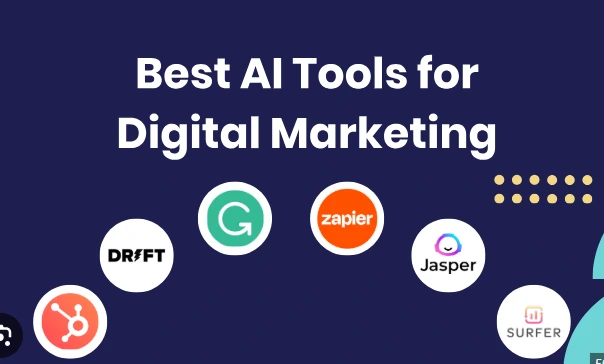
Many other tools are available and used by the marketers as per their needs and requirements. To read more about AI marketing tools, visit Digital Marketing Institute and Cliq Buzz.
Emerging Trends Of AI In Digital Marketing
The key trends of AI in digital marketing are as follows:
- Personalization of Customer Experience– By studying consumer behaviour and preferences, AI provides a personalized customer experience from content recommendation to advertisements. A better understanding of their needs helps in providing them better experience.
- AI Chatbots– These chatbots help in solving customer queries more efficiently and effectively than human agents. They provide 24/7 customer support to their users, hence building a trust and loyalty for the brand.
- Content Optimization– AI tools have provided ways for better ranking and visibility through automation and optimization of keyword research. It uses specified algorithms to predict SEO trends and consumer behaviour.
- Content Creation using AI– Tools like ChatGPT, Jasper provide aid in creating blogs, posts, emails, etc. to target the audience according to their preferences and needs.
- Predictive and Real-Time Analysis– Through data-driven decision making, AI helps in knowing the customer needs and provides an excellent experience to them.
- Voice and Visual Search Optimization– AI has helped in the adaptation of conversational keywords and NLPs(Natural Language Processing) due to the increasing voice and visual searches.
- Marketing and Campaign Automation– Automation of recurring marketing tasks provides data-backed campaigns and relevant content more efficiently.
Pros And Cons Of Using AI In Digital Marketing
Besides the opportunities of AI in digital marketing, it isn’t free from the challenges of AI in the same. Below are some of the pros and cons of using AI in digital marketing.
Pros of AI in Digital Marketing
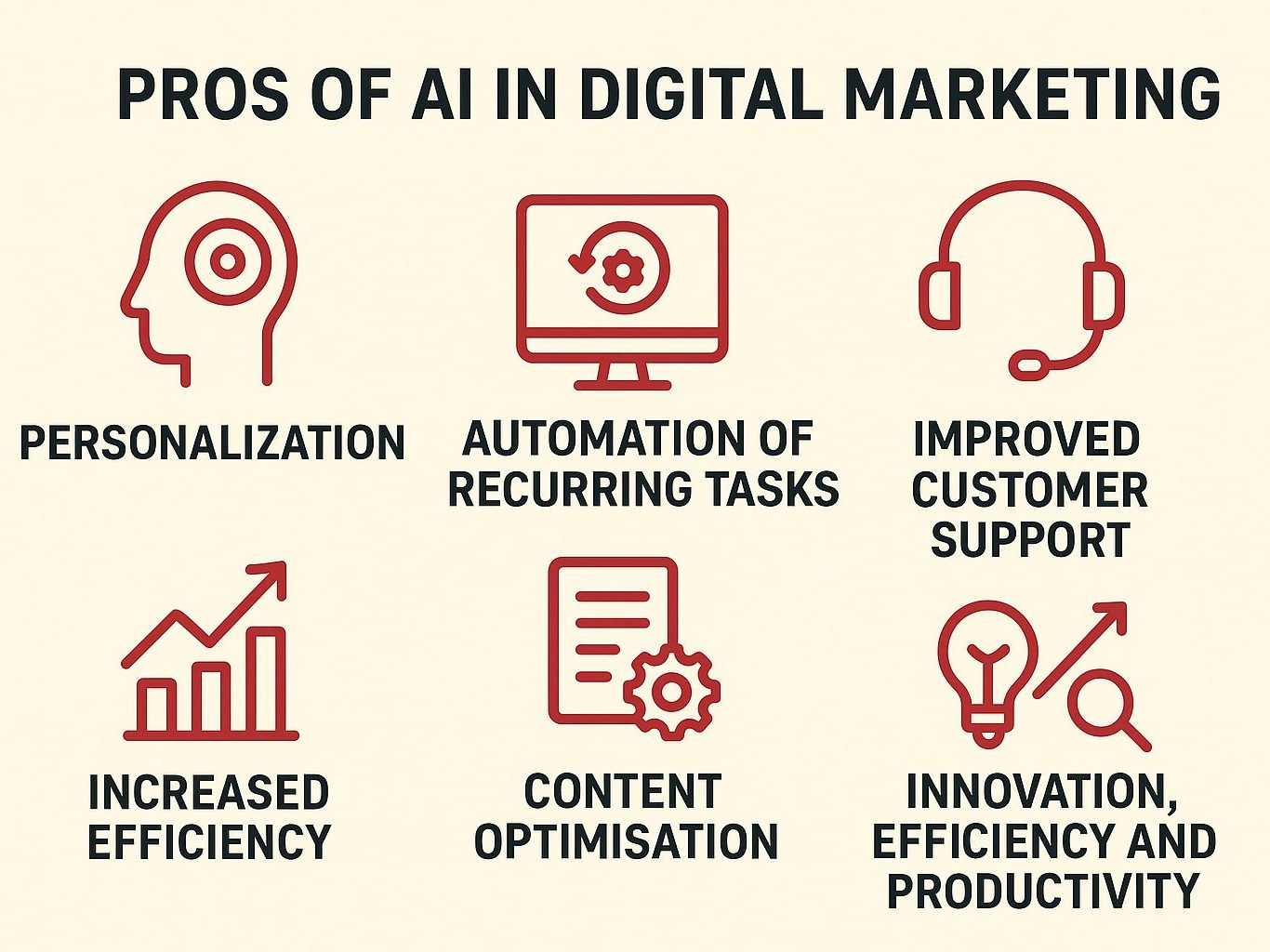
- Personalization– AI, with the help of personalization, provides accurate and relevant posts, emails, recommendations, and ads to improve consumer engagement.
- Automation of Recurring Tasks– Automation of repetitive tasks reduces time consumption. It handles tasks like email scheduling, data analytics, reporting etc.
- Improved Customer Support– Customer support services focus on resolving the issues in the minimum time, hence leading to the highest level of satisfaction for its customers. Now, customer support is available 24/7.
- Content Optimization– AI tools have helped in refining the content for better ranking and visibility. Voice and visual SEOs are being recognized for better engagement.
- Innovation, Efficiency, and Productivity– AI has proven to increase productivity, efficiency, and innovation in digital marketing.
- Predictive Analysis– Data-driven decision-making helps in making accurate forecasts of future trends. Thus, it leads to effective and efficient future planning.
Cons of AI in Digital Marketing
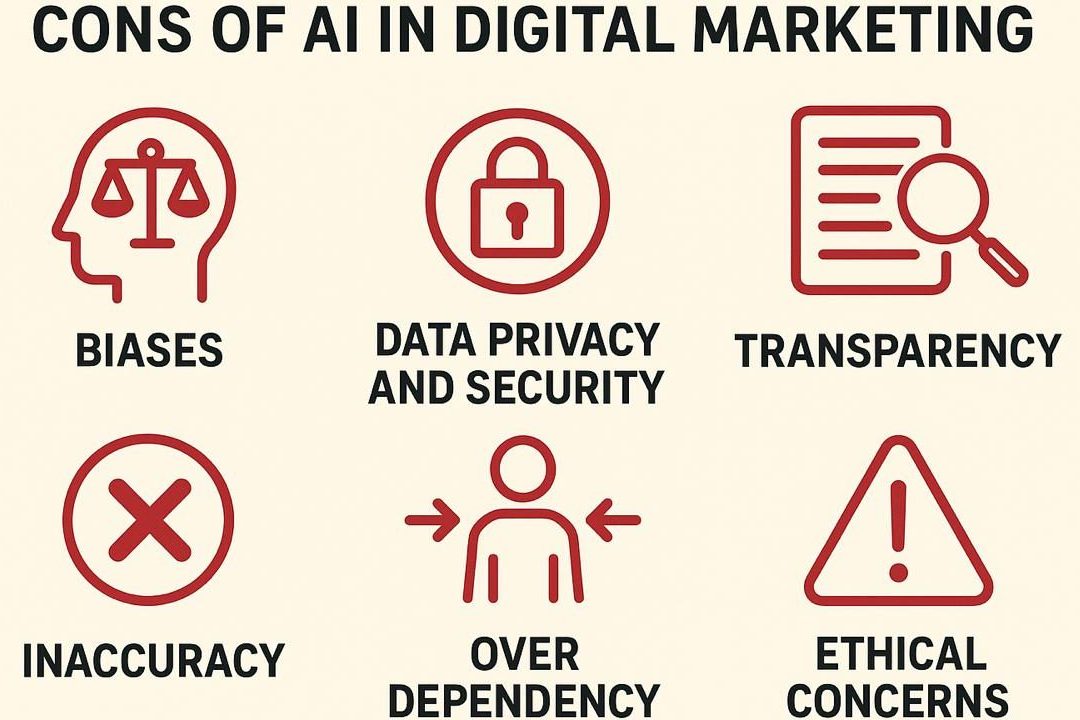
- Biasness– AI is only effective on the data that it is trained on. Hence, the misleading or inaccurate training of the datasets can lead to bias in the results generated.
- Data Privacy and Security– AI systems access and save information that may be sensitive in nature. Hence, it may lead to privacy concerns among the users.
- Transparency– The relevance of plagiarism, transparency, and ownership is increasing due to the high use of AI content.
- Inaccuracy– Data with errors and mistakes can lead to faulty analysis and, hence, produce irrelevant results.
- Overdependency– AI has led to overdependency of work on computers. Its excessive use is leading to the misuse of AI. It has affected human creativity.
- Ethical Concerns– Misuse of AI, like deepfakes, uninformed use of sensitive data, etc., has raised ethical concerns amongst the users.
Responsibility While Using AI
Responsibility while using AI in digital marketing refers to the use of AI that doesn’t violate consumer rights and protects them from fraud while prioritizing their privacy and security. Some key responsibilities that must be ensured while using AI in digital marketing are as follows-
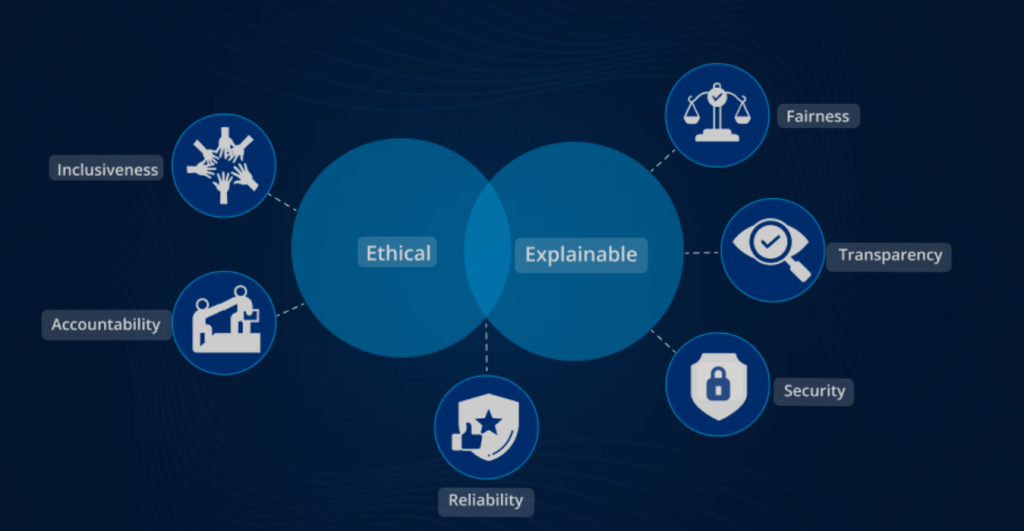
- Data Privacy and Security– Data collected must be consented to before any use. Customer’s information must be used ethically and transparently.
- Transparency and Fairness– Any AI tool or content used must be disclosed to ensure transparency and avoid any confusion.
- Avoiding Bias– Algorithms used must be free from any kind of discrimination and bias to avoid misleading results and to maintain the accuracy of results.
- Accuracy– AI-generated data must be verified with the actual data to avoid any misinformation.
- Ethical Content Creation– This involves the creation of content to inform consumers, not to manipulate consumers. Don’t create deepfakes, misleading news, deceptive ads, etc.
- Sustainable Use– Avoid unnecessary consumption of resources and educate people regarding AI ethics.
Conclusion
The rapid growth of AI in the marketing sector has transformed digital marketing. It is an aid to the marketers as it has helped in ranking and visibility of their content and sites. Though it is a great opportunity for the users but it must be used cautiously to avoid any misuse and misinformation.
To avail more services related to digital marketing, visit StepUpDigi.